
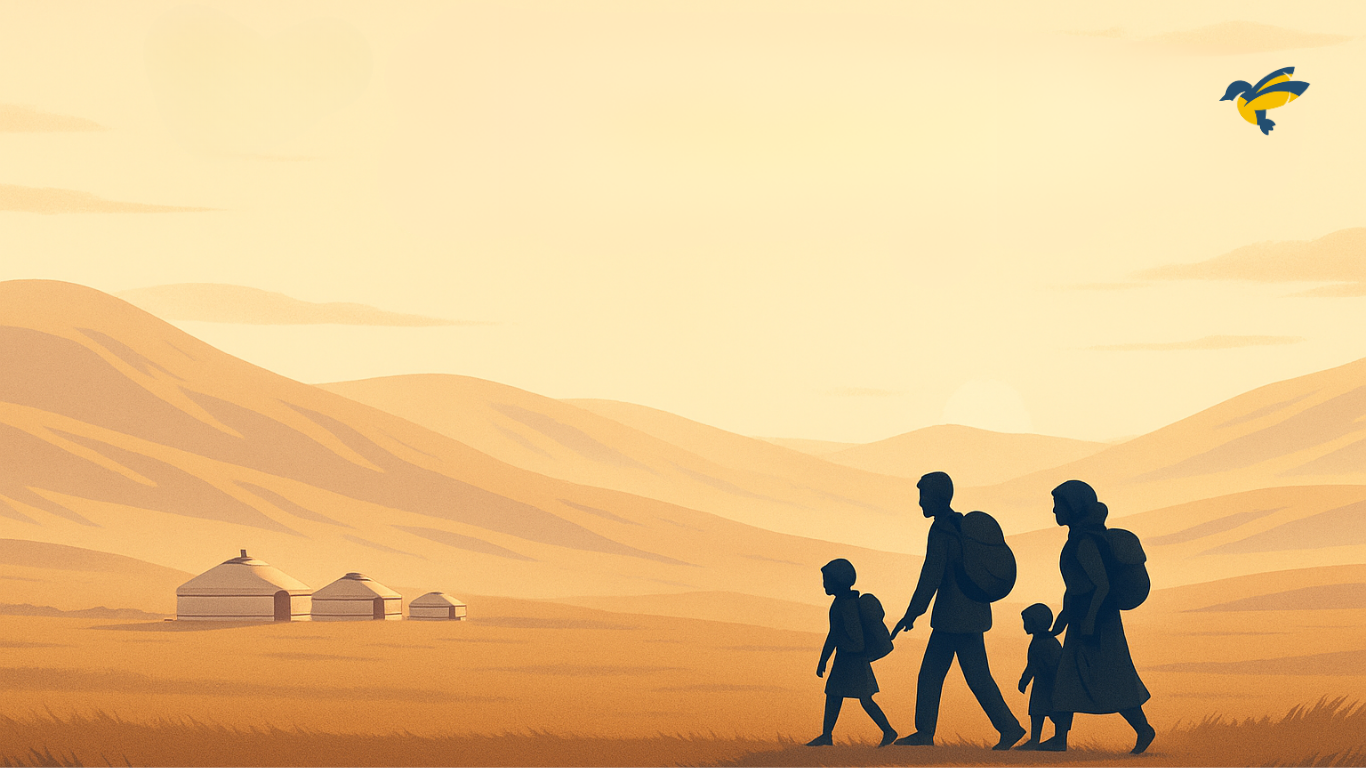
Our Vision
We protect and promote the rights of refugees and aim to reinforce the humane and democratic society in Mongolia that shelters and supports refugees.
Legal Support for Refugees
We Work with qualified lawyers and advocates to assist refugees and asylum seekers in understanding and protecting their rights.
Human Rights and Social Support:
We help refugees gain access to the necessary resources and public services and, at the same time, help build support for their inclusion in the community.
Legal Support
We provide legal support to help refugees navigate the complexities of the law. Our team is here to guide you through your legal challenges.
Advice and assistance in submitting applications to human rights organizations
Public awareness and advocacy activities
We advocate for refugees’ rights in Mongolia, working to raise awareness and influence policy changes that protect your rights.
Useful information
Community support and assistance
Join our community programs to connect with others, share experiences and build a supportive network.
Latest updates
Stay informed about your rights and opportunities. We provide up-to-date information to help you understand your situation.
If you would like to support the lives of refugees, please consider supporting our work by making a donation!
FAQ
Who is a refugee?
- A refugee is someone who is forced by war, armed conflict, crisis, or natural disaster to leave their home country and relocate to a different one.
-National Security Strategy Research Institute
- International law describes a refugee as a person who is forced to leave their home country due to the threat of violence or the fusion of law and lawlessness that would create a serious vindictive threat to their life, their body or their immediate freedom. This includes violence that is directed at them for, or due to them based on their religion, their nationality, their race, their spiritual or political advocacy.
-UNHCR (United Nations High Commissioner for Refugees)
How many refugees are there worldwide?
June 2025: 42.5 million refugees exist worldwide.
The total population that has been forcibly displaced has risen to 117.3 million globally and includes refugees, asylum seekers, and internally displaced persons (IDPs).
Where do refugees usually go?
About 71% of refugees and other persons of concern are hosted by low- and middle-income countries.
As of June 2025, the countries hosting the largest number of refugees are Colombia, Germany, Iran, Türkiye, and Uganda.
What is the difference between a refugee and a migrant?
- There exists no universally accepted legal criterion that differentiates refugees and migrants. Refugees are persons who, for one reason or other, voluntarily leave their home country and in most cases, their home country continues to offer them protection.
- Refugees must abandon their homeland as a response to persecution, violence, climate crises, or severe rights abuses, and they must receive protection from the international community.
Who are asylum seekers?
- An asylum seeker is an individual that is waiting on the legal decision to their application for protection in another state. They are fleeing persecution or rights abuses in their home country.
- Timelines for these decisions can vary and are legally made through courts and/or government ministries.
- While not every asylum seeker is granted refugee status, they cannot be sent back to their home country while the legal response to their application is pending.
What is refugee resettlement?
- If conditions do not permit refugees to return home, and/or they are no longer safe in their first country of asylum, what is described as resettlement is activating the process to relocate said refugees to a new country, one that will offer them protection from it (non-refoulement), and provide them a permanent place to live.
- The long process of resettlement can eventually lead to different citizenship for the refugees.
What are the criteria for refugee status?
The UNHCR, which is the United Nations High Commissioner for Refugees, is the sole organization permitted to issue refugee status. For example, the UNHCR influences the decisions for applications from Mongolia, and these applications are predominantly taken care of at the UNHCR office situated in Bangkok Thailand.
Status is given to applications that present a clear and evidenced unease of persecution stemming from ethnic or religious differences. All applicants are expected to undergo background checks, including a review of their character, as applicants that are suspected of war crimes, or crimes against humanity are not granted the status they seek.
How to apply:
There are two ways to submit an application at Mongolian UN office:
Go in person
Fill in an application online
Set up an appointment.
Then come in with:
Your ID(s)
Your phone number and address in Mongolia
Supporting evidence (if you have any)
Your written statement
Supporting evidence of family relations (if you’re bringing family who are refugees)
What is the purpose of this organization?
Freedom Wing NGO tries to resolve the social concerns refugees face, shift the perception to a more positive one, and assist in the protection of refugee rights.
This is our primary focus:
Legal aidHuman rightsDemocracy
We give newcomers the information they need and help them contact human rights protection agencies and the UN.
Can you seek asylum in Mongolia?
According to the laws of Mongolia, any person is entitled to apply for asylum.
The right to asylum is granted to Mongolian presidents.
You can submit your application right in the President’s Office, or you can send your application to the President’s Office by post.
There is no period in which the application will be assessed.
How slow is the process?
The process may take 1–5 years or longer, depending on:
Your case
UNHCR workload
Global conditions
During this time, applicants receive an asylum seeker certificate.
Can refugees get Mongolian citizenship?
Here is when Mongolian citizenship can be granted:
Having a Mongolian citizen as a parent.
Birth in Mongolia and under certain conditions.
Residence in Mongolia for a period of at least 5 years.
Ability to speak Mongolian, knowledge of the Mongolian culture and laws, and the financial means to support oneself.
In particular, the President can grant citizenship to those whose skills or contributions are noteworthy.
How long can I stay in Mongolia?
- You can remain in Mongolia for the entirety of the asylum application process.
- If your application is denied, you must depart Mongolia before your visa is cancelled.
Is there a risk of being detained or returned at the border?
- If you try to enter Mongolia without permission, the border police are authorized to detain you.
- In contrast, Mongolia is likely to respect its obligations to attempt to not remove you back to danger, if you explain the border police should not return you, because of your asylum request.
- Border police may attempt temporarily to return you to your country of origin, and may attempt to return you to your country of origin either without a return ticket or without.
- It is unlawful to return you to your country of origin, border police, if you prove to them you are a refugee.
Is resettlement to a third country possible?
- If the UNHCR recognizes you as a refugee, resettlement to a third country is possible within 2-5 years. The UNHCR advocates your case to countries that will accept refugees. If a country accepts you, you will move to that country.