Developments in the Inner Mongolia Autonomous Region, particularly concerning the cultural, linguistic, and fundamental rights of its residents, have increasingly attracted international attention. Historically, the foundations for Inner Mongolia’s incorporation into China were established after it came under the influence of the Qing Dynasty in the mid-seventeenth century. In 1947, it was formally established as an autonomous region. Since then, significant demographic changes have occurred, particularly through the large-scale migration of Han Chinese settlers. As a result, ethnic Mongols now constitute only about 17 percent of the region’s population, becoming a minority within their ancestral homeland. This demographic imbalance has contributed to many of the cultural and social challenges facing Inner Mongolia today.
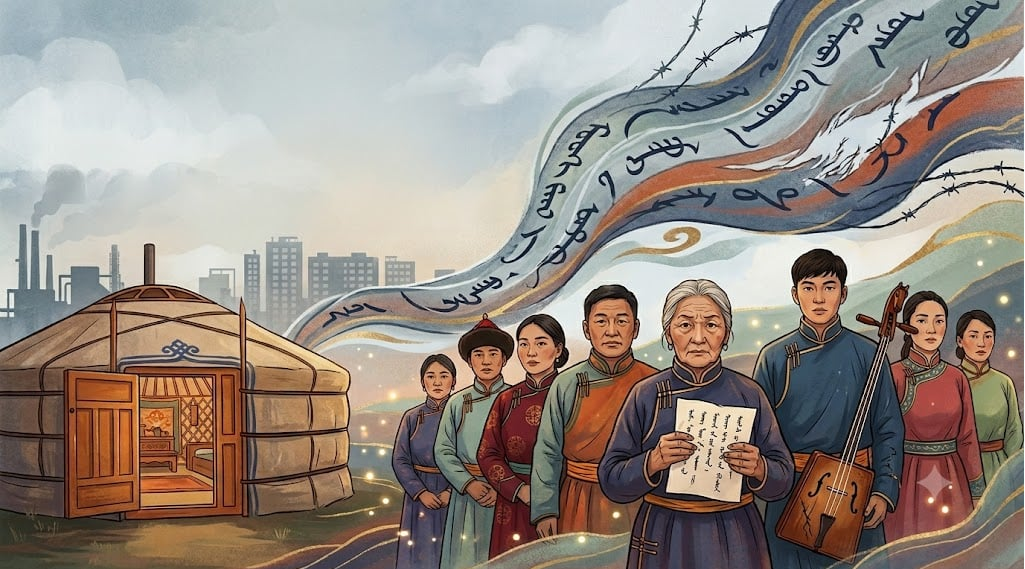
In recent years, the Chinese government has implemented policies aimed at strengthening national unity, which critics argue have resulted in increased cultural assimilation. One of the most significant developments was the education reform introduced in 2020. Under this policy, key subjects previously taught in the Mongolian language were transitioned to Mandarin Chinese instruction. At the same time, measures were introduced that limited the use of the traditional Mongolian script in public spaces, online platforms, and certain government institutions. Peaceful demonstrations and public opposition organized by ethnic Mongols seeking to preserve their language, history, and cultural identity were reportedly dispersed by authorities, while some activists were detained. According to reports from human rights organizations monitoring the region, these actions raised concerns regarding restrictions on freedom of expression and cultural rights.
Beyond cultural and linguistic issues, rapid economic development and industrialization have also affected the rights and livelihoods of traditional herding communities. The expansion of mining operations and industrial projects has reduced grazing lands and contributed to environmental degradation in some areas. As a consequence, the continuation of traditional nomadic pastoralism, practiced for centuries, has become increasingly difficult. Programs encouraging or requiring herders to relocate to permanent settlements have also been implemented. Critics argue that these policies may affect land-use rights and traditional livelihoods, while individuals who have protested land-related decisions or sought to protect grazing areas have, in some cases, faced legal penalties.
International organizations and human rights advocates have repeatedly expressed concern regarding these developments in Inner Mongolia. However, the Chinese central government has rejected such criticisms, characterizing them as interference in China’s internal affairs. Chinese authorities maintain that their policies are intended to improve educational standards, promote economic development, and strengthen social cohesion throughout the region.
As a result, issues related to human rights and the preservation of minority identities in Inner Mongolia remain subjects of ongoing debate. The region continues to be at the center of discussions concerning the balance between state-led development and national integration policies on one hand, and the protection of cultural, linguistic, and minority rights on the other.
Climate Refugees
Extreme weather events, environmental degradation, and natural disasters are fundamentally transforming the lives of people across the globe. In recent years, increasing numbers of individuals have been forced to leave their homes due to drought, desertification, rising sea levels, and other climate-related impacts. As a result, the concept of “climate refugees” has gained growing international attention. According to joint research conducted by the United Nations High Commissioner for Refugees (UNHCR) and the Internal Displacement Monitoring Centre (IDMC), more than 20 million people on average are displaced each year by extreme weather events. This phenomenon is no longer solely an environmental issue; it is increasingly recognized as a humanitarian, human rights, and sustainable development challenge with global implications.
The term “climate refugees” is commonly used to describe people who are forced to leave their homes because of sudden natural disasters or long-term environmental degradation that makes their communities uninhabitable. However, these individuals do not yet benefit from formal protection under international refugee law. The 1951 Convention Relating to the Status of Refugees defines a refugee as a person who has crossed an international border due to persecution based on race, religion, nationality, membership in a particular social group, or political opinion. Consequently, people displaced primarily by climate-related factors are generally excluded from this legal definition. Moreover, most climate-related displacement occurs within national borders, creating large-scale internal migration rather than cross-border refugee movements.
Climate change also intensifies existing social and economic vulnerabilities. Communities whose livelihoods depend directly on natural resources, such as farmers and pastoralists, are often among the first to experience its impacts. Increasing climate variability can contribute to water shortages, undermine food security, and increase the risks of poverty and hunger. In many cases, people decide to migrate not only because of environmental conditions themselves but also because climate-related economic pressures have reduced their ability to sustain their livelihoods.
Recognizing these challenges, the international community has begun to take action. The Global Compact for Safe, Orderly and Regular Migration acknowledges environmental degradation, climate change, and natural disasters as significant drivers of human mobility and encourages governments to develop strategies for prevention, adaptation, and resilience. In addition, international organizations and civil society groups have expanded humanitarian assistance programs for climate-affected populations and continue to advocate for greater legal recognition and protection of those displaced by environmental factors.
As climate change accelerates, the issue of climate-related displacement is expected to become increasingly urgent. Addressing the needs of climate-displaced populations will require stronger international cooperation, increased financial support, and the development of legal and policy frameworks capable of responding to one of the defining humanitarian challenges of the twenty-first century.