On December 10, in Warsaw, Poland, at an international conference titled “Political Repression in Mongolia and the Politics of Memory,” N. Zolzaya, founder of Freedom Wing NGO, presented a paper on “How Political Repression in Mongolia is Remembered Today.”
Good afternoon, everyone.
Today, I will present on political repression in Mongolia. This was a brutal period carried out under Soviet influence, during which tens of thousands of Mongolians—including Buddhist monks, intellectuals, and ordinary citizens—were executed, imprisoned, or exiled. This history is not only about the past; it reflects intergenerational memory, emotional trauma, and struggles for survival. By studying it, we can better understand the dangers of authoritarianism and recognize the importance of remembering our past in order to protect democracy and human rights today.
Research Question:
How was Soviet/Russian political repression carried out in Mongolia, and how is it remembered in contemporary Mongolian society?
Objectives:
- To analyze the historical experience and mechanisms of repression
- To examine how memory and understanding have evolved since 1990
- To interpret how memory connects to contemporary democracy and civic engagement
In the twentieth century, Mongolia experienced one of the most devastating political tragedies in its history. The so-called “Great Repression” of the 1930s–1940s, carried out with Soviet involvement, claimed tens of thousands of lives, dismantled Buddhism as a cultural and spiritual foundation, and left deep psychological and social scars. Under the socialist regime, this tragic history was suppressed, denied, or distorted for nearly half a century. Only after the democratic revolution of 1990 did Mongolian society begin to openly discuss repression, commemorate victims, and reflect on its meaning. Some scholars even argue that the term “political repression” is too mild and instead describe it as genocide.
International Context of the 1930s Repression
In the early 1930s, tensions between the Soviet Union and Japan made Mongolia a strategically important buffer zone. This led to increased Soviet control and the implementation of political purges. Key examples include the Lkhümbe Affair (1933) and the Genden–Demid case (1937), both influenced by fears that Mongolia could fall under Japanese influence, exposing Soviet interests in Asia.
Historian D. Ulziibaatar identifies several internal factors contributing to repression:
- Mongolian leaders’ independent policies often conflicted with Comintern directives
- Mongolia’s affairs were frequently determined through diplomatic arrangements between its two neighbors
- Targeting Buddhist monks aimed to destroy the spiritual unity of the Mongolian people
Scope of the Repression
A total of 31,652 people were affected, including 18,775 monks—nearly 60% of the victims. This represented about 13% of Mongolia’s population at the time (approximately 800,000).
Mechanisms of Repression
Repression in Mongolia followed a Soviet-imposed model. Nearly 70% of Ministry of Internal Affairs officials were Soviet personnel, while loyal Mongolian cadres were trained in Moscow. Local leaders had limited choices and often carried out policies out of fear.
Silence and Survival Strategies
Trials were secret, and burial sites were concealed. Families remained silent out of fear, passing down this coping strategy across generations. This is reflected in my own family history: my grandfather, a monk, was arrested during Stalinist purges but managed to escape. He hid his past throughout his life and practiced religion only at night. I later learned this story from my grandmother. This illustrates how repression forced silence across many Mongolian families, preserving memory in hidden forms.
Memory Since 1990
The democratic revolution enabled public remembrance, but memory remains fragmented and contested. A state commission was established, and in 1996 the government issued an official apology and declared September 10 as the Day of Remembrance for Victims of Repression. Over 31,000 victims have been rehabilitated, and more than 200 memorial sites have been established. Some, like Khamaryn Ovoo, are visible, while others remain forgotten.
The State Commission on Rehabilitation has played a central role by researching cases, restoring victims’ reputations, maintaining national archives, and organizing annual commemorative ceremonies, including Buddhist rituals.
Contemporary Memory Politics
Today, major memorial events are held at sites such as Khamaryn Ovoo and the central monument in Ulaanbaatar. Civil society—including NGOs, schools, and social media creators—also plays a vital role in preserving memory. My online survey of over 20 participants revealed ongoing debates over whether responsibility lies with domestic actors or Soviet authorities, showing that memory remains active but divided.
Case Study: Khamaryn Ovoo
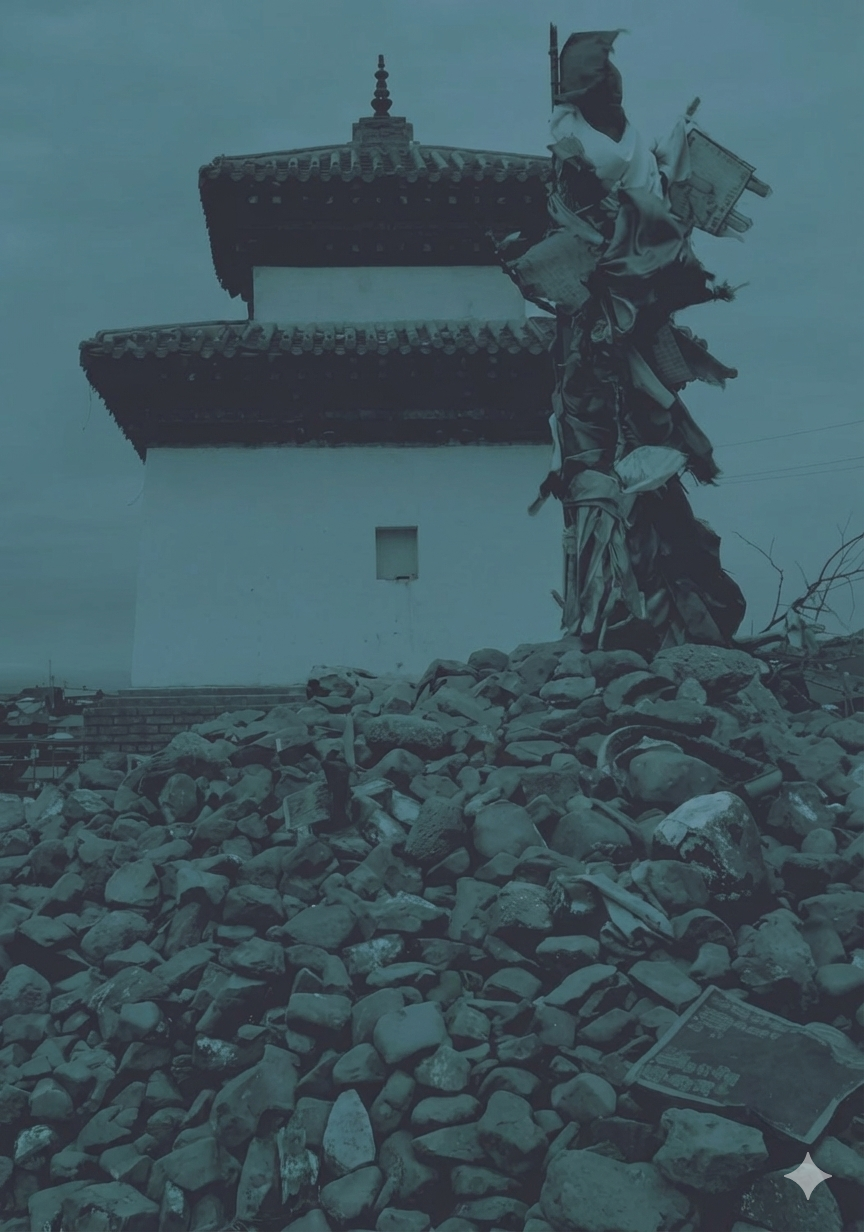
Located in Songinokhairkhan District, Khamaryn Ovoo is a key site of memory. Originally a sacred religious site, it became an execution ground during the 1937–1939 purges. In 2003, construction work uncovered remains of 575 victims, many shot in the head. Since 1990, annual ceremonies have been held on September 10, though irregularly. In contrast, ceremonies at the central monument near the Government Palace are more consistent, making it the most stable official site of remembrance.
This case highlights both the strength and fragility of memory in Mongolia—while some sites hold symbolic significance, many of the over 200 memorial locations remain neglected.
Memory and Geopolitics
Russia’s war in Ukraine has revived fears of dependency and renewed debates about sovereignty in Mongolia. Activists and scholars draw parallels between Stalinist repression and contemporary Russian aggression, using memory as a tool to defend democracy and resist authoritarian influence. While civil society openly engages with these issues, the government often takes a cautious stance due to economic and political ties with Russia.
NGO and Activist Perspectives
NGOs and activists view memory as essential for justice, reconciliation, and strengthening democracy. They emphasize intergenerational trauma and argue that open discussion helps societal healing and civic awareness. While some resistance exists, most participants in my research believe that preserving memory is a defining feature of a democratic society.
For example, testimonies suggest that some officials executed prisoners before the end of their sentences to conceal evidence of repression.
The Mongolian Political Repression Victims Association
According to the association, victims and their families continue to carry deep psychological trauma. Many live in persistent fear, avoiding public life and worrying about renewed persecution. The association estimates that around 90% of affected families still experience this fear.
During a 2016 protest by descendants of victims, one slogan asked:
“Should there be a monument to Choibalsan, who executed 20,000 Mongolians and was awarded by the NKVD?”
They continue to demand justice, compensation, and recognition for long-term harms such as wrongful executions, confiscation of property, poverty, and lack of access to education.
Conclusion
Remembering political repression is crucial for understanding the vulnerabilities that shaped Mongolian society and continue to influence it today. Russia’s war in Ukraine has renewed the relevance of this history, prompting comparisons between Soviet domination and contemporary geopolitical pressures. Memory is closely tied to themes of decolonization, sovereignty, and democracy, while commemorative practices transform sites of violence into spaces of reflection—similar to Katyn in Poland and Butovo in Russia.
Engaging consciously with historical memory strengthens democracy and helps safeguard Mongolia’s future. Without a firm commitment to the rule of law and human rights, such tragedies could recur—even through our own actions.