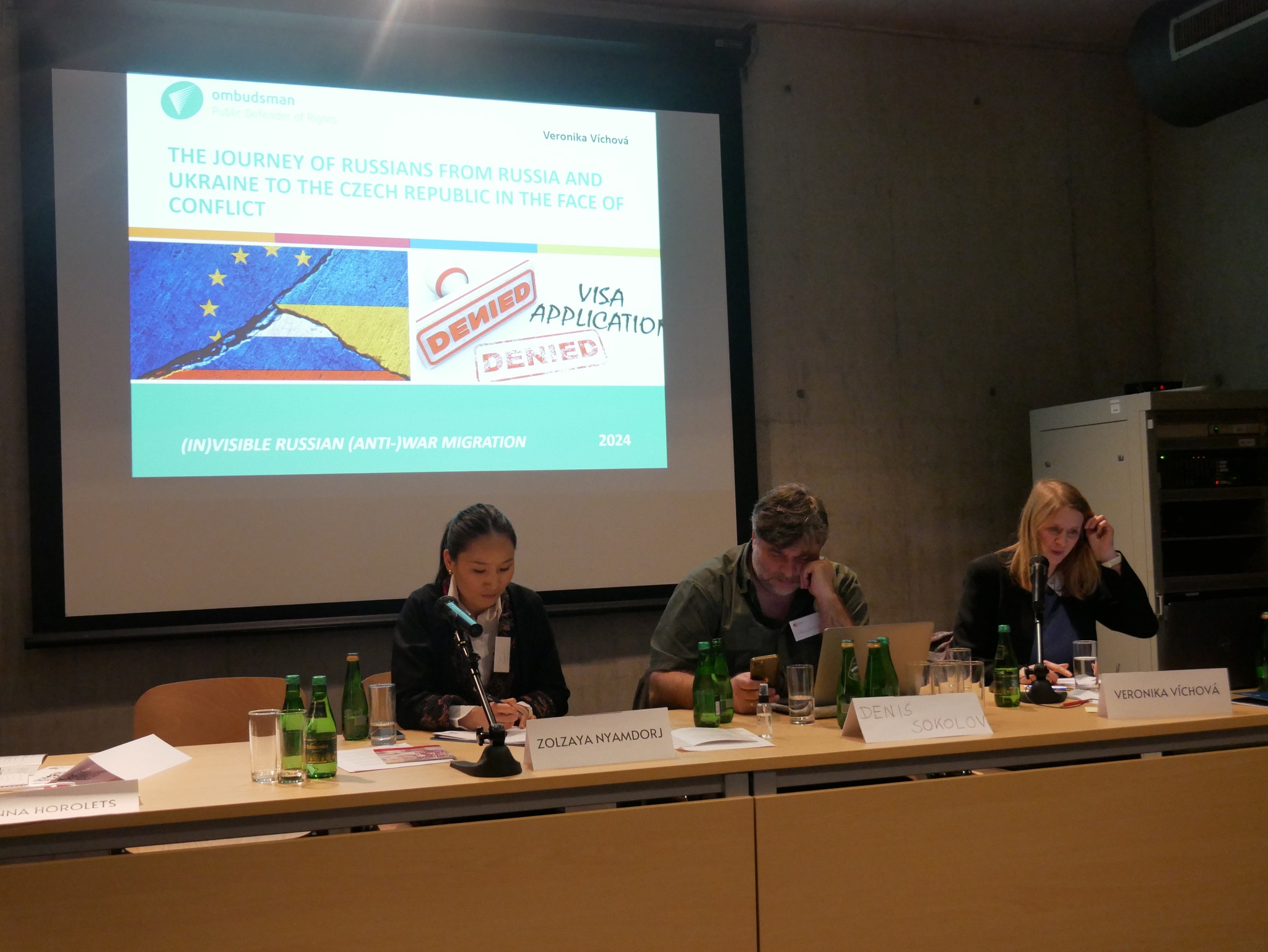
Presentation at the International Conference “Invisible Migrants from Russia Against the War”
Warsaw, Poland
N. Zolzaya
March 15, 2024
Good day everyone,
Today, I will present on how Russian biopolitics influences human rights organizations in Mongolia.
Historical Background
According to treaties signed in 1689 and 1727, Buryat territories and people were formally incorporated into Russia. From the early 20th century until 1919, Buryats periodically migrated to Mongolia, and a new wave of migration occurred again in 2022.
Ethnic Mongols living abroad are treated as foreign nationals in Mongolia, which creates difficulties in obtaining visas. According to the Law on the Legal Status of Foreign Nationals in Mongolia, permanent residents account for 0.5% of the population, of which ethnic Mongols make up only 0.17%.
Mongolia has not acceded to the 1951 UN Refugee Convention. Therefore, the only available solution has been to cooperate with the UN to safely transfer refugees to third countries and to avoid forced return.
In 2002, Mongolia signed the Convention against Torture and Other Cruel, Inhuman or Degrading Treatment or Punishment. This convention serves as a key legal instrument for human rights organizations in Mongolia to hold the government accountable. It clearly states that no person should be expelled or returned to a country where they face a substantial risk of torture.
Case Example
A Kalmyk anti-war activist (B) fled Russia and arrived in Mongolia after his passport expired while he was in Kazakhstan. Identifying as ethnically Mongolian, he hoped Mongolia would assist him. However, he was denied entry due to his expired passport and remained at the airport for several days. NGOs and volunteers eventually helped him travel to a third country.
This case highlights the need for Mongolia to develop policies for receiving ethnic Mongols. Since the announcement of mobilization on September 21, 2022, many Buryats began entering Mongolia. Daily arrivals ranged from 200 to 800 people, reaching a total of approximately 56,000 by late July of that year. This became a critical experience for Mongolian society.
Although the government maintained a neutral stance regarding the Russia–Ukraine war, its approach toward those fleeing mobilization was relatively flexible. Organizations such as UNHCR in Mongolia, the National Human Rights Commission of Mongolia, and Amnesty International Mongolia monitored the situation closely.
Despite the absence of a specialized institutional framework, local NGOs and volunteer groups responded quickly. This response may also reflect a cultural perception of Buryats as “a part of our flesh and bones, fragments of our golden lineage.”
Government Position
While Mongolia is a democratic country, its geopolitical position requires neutrality in matters involving Russia and China. Authorities granted temporary residence permits, and many migrants remained on student visas. Additionally, travel visas were extended under COVID-related regulations.
Civil Society Response
Political analysts recommended that the government create a more supportive environment for NGOs and assist with employment opportunities, but these measures were not implemented. Scholars emphasized that supporting human rights during wartime is crucial for demonstrating Mongolia’s democratic values internationally.
NGOs generally advocate for:
- Non-refoulement (no forced return)
- Non-discrimination
Some organizations classify these migrants as refugees.
Types of NGOs and Civil Society Actors
- Volunteer groups supporting migrants
- Civic movements promoting peace and unity
- NGOs focused on Mongolian identity (e.g., World Mongol Federation)
- Buryat cultural organizations
- International human rights organizations (e.g., UN bodies, Amnesty International Mongolia)
- Migrant-led organizations (e.g., Buryat Center)
Key Activities
- Networking events and excursions
- Creation of websites and group chats
- Advocacy and awareness campaigns
- Job placement support
- Monitoring and analysis
- Mongolian language education
- Scholarship programs
Key Challenges
The main challenges include:
- Visa issues
- Housing
- Employment
- Language barriers
NGOs assist by writing invitation letters, providing legal advice, and supporting visa applications. Some volunteers offered free accommodation, while others stayed in small shared spaces such as the Buryat Center office.
Employment remains difficult due to high taxes imposed on hiring foreign workers—nearly three times higher than for Mongolian citizens. As a result, some migrants work informally and face wage exploitation. According to the Buryat Center, 472 such cases were recorded in 2023.
Although many Buryats do not speak Mongolian, those familiar with the Buryat language can learn it relatively quickly. Volunteer groups have provided free language classes over the past two years, but limited funding and human resources threaten their sustainability.
Social Tensions
An early incident involved a drunken Buryat individual killing a Mongolian citizen, which caused public fear. In response, Buryat communities took proactive measures, including monitoring nightlife venues and launching awareness campaigns to prevent further incidents.
Policy Developments
To address migration challenges, initiatives such as the proposed “Mongol Card” law have emerged. This proposal aims to grant ethnic Mongols—particularly from former Soviet regions—a legal status similar to Mongolian citizens.
This idea is not new:
- In 2011, former President Ts. Elbegdorj emphasized the need for population policy and repatriation laws
- In 2013, singer S. Javkhlan launched the “KhamaG Mongol” cultural project
- In 2016, activist and journalist Ch. Munkhbayar proposed a repatriation law
Although these initiatives were not implemented, they demonstrate a continuing policy lineage, with the Mongol Card representing a more refined and actionable proposal.
Conclusion
The influx of migrants fleeing Russian mobilization has strengthened the capacity of Mongolian NGOs to respond to human rights challenges. Moving forward, Mongolia should adopt policies to receive ethnic Mongols and uphold human rights protections, even within complex geopolitical constraints.
Additionally, greater public awareness, international assistance, and cooperation will be essential.
Finally, I invite all of you to collaborate with us in supporting migrants and refugees who have fled Russia in opposition to the war.
Thank you.