The number of forcibly displaced people worldwide reached 123.2 million in 2024. However, the issues facing refugees and migrants cannot be measured solely by borders, housing, and food. The war, violence, loss, and uncertainty in new environments that force people to flee their homelands leave invisible, long-lasting scars on human mental health.
Leaving a dangerous location does not cause fear to vanish immediately. Fear is amplified by pre-displacement persecution, conflict, and poverty; exploitation and violence encountered during transit; and unemployment, housing instability, language barriers, and discrimination awaiting in destination countries. Thus, displacement is not a single event, but a factor that impacts human psychology at every stage.
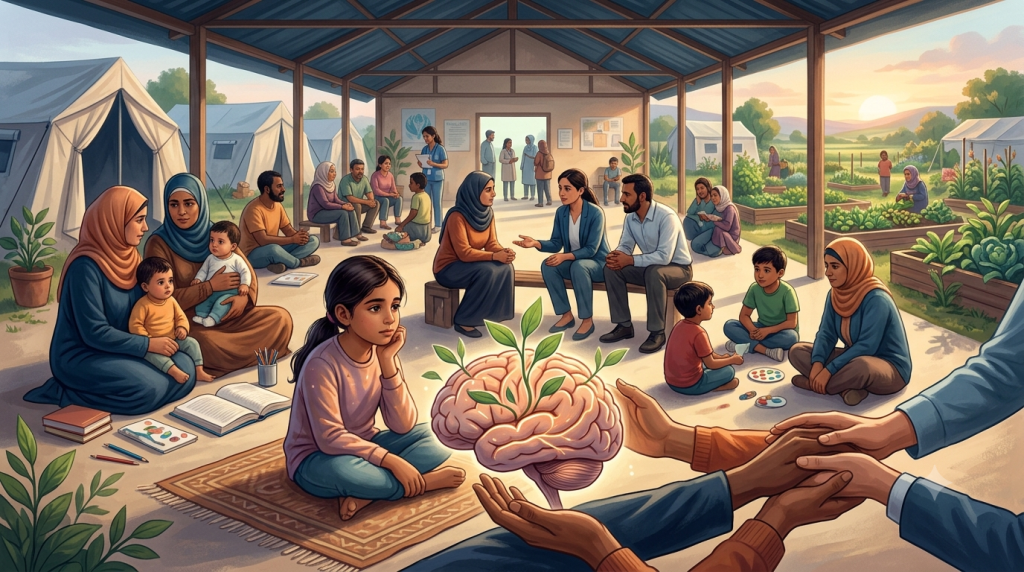
Many refugees experience anxiety, insomnia, sadness, anger, and hopelessness. While these can be normal human reactions to difficult circumstances, exposure to violence, family separation, and prolonged uncertainty heighten the risk of depression, anxiety disorders, post-traumatic stress, and suicide. Language and cultural barriers, costs, insurance limitations, fear surrounding legal status, stigma, and lack of information on where to seek help prevent refugees from accessing psychological care. Consequently, psychological support for refugees must be delivered in clear, culturally sensitive language, establishing trust and continuity. Furthermore, the most effective way to protect mental health is to tie treatment to real-world living conditions. Safe housing, legal protection, access to education and employment, the right to family unity, and community support are as essential as clinical therapy. Recent studies show that stepped-care models—beginning with low-cost support and transitioning to more intensive care as needed—can be effective. However, if living environments remain unstable, the long-term impact of refugee support services remains limited.
Frontline personnel who interact with refugees daily—such as primary care physicians, social workers, teachers, and immigration officers—must be trained to recognize early signs of distress and connect individuals with appropriate services. Services must feature professional interpretation, respect cultural nuances, and guarantee data privacy and safety regardless of an individual’s legal status. Additionally, vulnerable groups such as unaccompanied minors, persons with disabilities, and those prone to discrimination require tailored, rather than one-size-fits-all, support. Assistance yields tangible results only when individuals are viewed holistically—considering their housing, employment, family, education, and safety alongside their diagnostic needs.
Research indicates that even after reaching physical safety, an individual does not feel secure if their life remains in limbo. Awaiting residence permits, not knowing when they will reunite with family, remaining without work authorization for prolonged periods, and moving from one temporary shelter to another reopen past wounds daily rather than healing them. In other words, psychological distress stems not only from events in one’s home country, but also from how long host countries and new societies keep individuals in uncertainty.
For children in particular, school is more than a place to study; it provides structure, friends, trusted adults, and a space to envision a future. Conversely, family separation, constant relocation, and lack of language support can deepen a child’s fear and isolation. Thus, psychological aid for children cannot be isolated from the school environment, family unity, and safe living conditions.
Sometimes, the most effective “mental health support” occurs outside the therapy room. Comprehensive policies that grant opportunities for family reunification, employment rights, clear information in familiar languages, professional interpretation, and continuous health records restore control and stability to refugees’ lives. Such policies reflect an understanding of refugees and migrants not merely as recipients of aid, but as citizens capable of contributing their skills, labor, and experience to society. Therefore, refugee mental health is not merely a medical issue, but a matter of human rights and social policy. Persistent fear, isolation, discrimination, and uncertainty can make even a healthy person ill. Ultimately, how refugees are received is not just a matter of borders and registration—it is a choice to safeguard human dignity, mental health, and the opportunity to rebuild a life in society.